

Introduction
Why Is Fashion Industry Waste a Growing Problem in Europe?
The fashion industry has become one of the world’s most resource-intensive sectors. In Europe, textile waste is a growing environmental concern, contributing to overloaded landfills, increased incineration, chemical pollution, microplastic release, and rising greenhouse gas emissions.
The fast fashion model accelerates a cycle of overproduction and disposal. Garments—often made from synthetic, non-biodegradable materials—are worn briefly and discarded quickly. This system not only generates excessive textile waste but also places significant pressure on natural resources, energy consumption, and water usage.
As European regulations and consumer awareness increasingly emphasize sustainability, durability, and responsible manufacturing, the industry is under pressure to rethink how garments are designed and produced.

Why Integral Knitting Matters
Integral knitting represents a fundamental shift away from traditional cut-and-sew garment construction. Instead of producing flat panels that require cutting, stitching, and assembly, integral knitting allows garments to be produced directly in their final or near-final shape on a knitting machine.
This seamless production method significantly reduces material waste, labor intensity, and production time. With advances in knitting technology, integral knitting has been adopted by both luxury and mass-market brands as a practical solution for improving efficiency, comfort, and sustainability.
In this article, we explore how integral knitting is reshaping apparel—and especially hat manufacturing—by offering a cleaner, smarter, and more future-oriented alternative to conventional production methods.
What Is Integral Knitting?
A useful way to understand integral knitting is through analogy.
Traditional garment production is like building an object from separate parts—front panel, back panel, sleeves—then cutting, sewing, and assembling them together.
Integral knitting, by contrast, is closer to 3D printing a garment in one continuous process.
Using advanced knitting machines, the near-net shape of the final product is created directly during knitting. This eliminates most cutting and sewing steps, reducing material waste and simplifying production. According to Savci and Curiskis (1997), the main advantages include lower material waste and reduced labor costs.
With modern machinery such as Shima Seiki’s WholeGarment flatbed knitting systems, manufacturers can produce seamless, three-dimensional forms by programming geometry directly via digital knit data (e.g., KnitCAD). In many cases, only minimal post-processing—such as trimming—is required, and even this can often be integrated into the machine workflow.

How Integral Knitting Works
1. Digital Design (CAD-Based Development)
The process begins with designing the garment or component in specialized software such as KnitCAD, SDS-One APEX, or M1plus. Designers define shape, structure, stitch types, and functional zones digitally.
2. Advanced Knitting Machinery
Flatbed or circular knitting machines interpret the digital design and execute it with high precision, controlling needles and yarn carriers in real time.
3. Integrated Stitch Formation
Rather than producing separate panels, the machine forms the garment as a unified structure. Different areas—such as body, sleeves, or crown sections—are integrated during knitting.
4. Precise Yarn & Needle Control
Advanced tension systems and needle movements allow the creation of complex 3D shapes, smooth transitions, and functional zones within a single piece.
5. Seamless Construction
Because the garment is produced as one continuous structure, traditional seams are eliminated, resulting in improved comfort, durability, and aesthetic consistency.
Key Technologies Behind Integral Knitting
1. 3D Knitting Capability
Controls fabric structure across X, Y, and Z dimensions, enabling curved forms such as hat crowns, shoulders, and ergonomic contours.
2. Stitch Variation
Different stitch types—rib, jersey, jacquard, lace—can coexist within a single garment, allowing variations in texture, thickness, stretch, and breathability.
3. Yarn Versatility
Compatible with wool, cotton, polyester, nylon, and elastic fibers such as spandex. Blended yarns are especially effective for performance and comfort.
4. Digital-to-Machine Workflow
Designs move seamlessly from CAD software directly to knitting machines, reducing sampling cycles and development time.

Advantages and Limitations of Integral Knitting
Key Advantages
1. Sustainability & Reduced Waste
Integral knitting is inherently low-waste. Because garments are knitted to shape, offcuts are nearly eliminated. Fewer production steps also mean lower energy consumption and a reduced carbon footprint—key priorities for European brands.
2. Lower Labor Costs
The removal of cutting, sewing, and linking processes significantly reduces labor requirements and associated costs.
3. Faster Time to Market
Integrated design and production shorten lead times, enabling quicker response to market trends and demand fluctuations.
4. Consistent Quality
Automated control ensures uniform stitch formation and yarn tension, improving overall product consistency.
5. Superior Comfort & Fit
Seamless construction eliminates pressure points and friction, enhancing comfort—especially important for activewear, underwear, and headwear.
6. Enhanced Durability
By removing seam-related weak points, integral knitting improves garment strength and longevity.
7. Design Freedom
Functional elements such as pockets, vents, shaping darts, and decorative patterns can be integrated directly into the knitting process.

Limitations
-
High initial investment in machinery
-
Requires skilled programming and technical expertise
-
Lower output compared to high-volume mass production systems
Applications in Hats: Seamless Innovation in Headwear
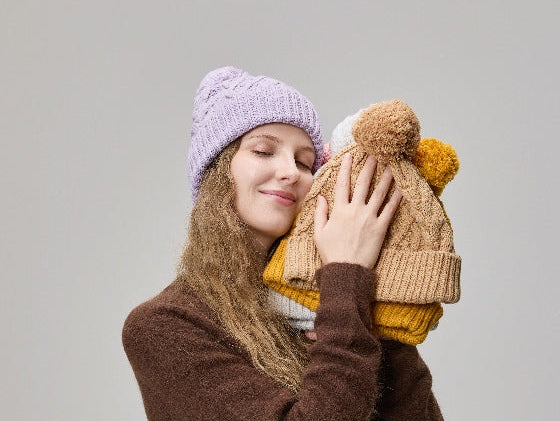
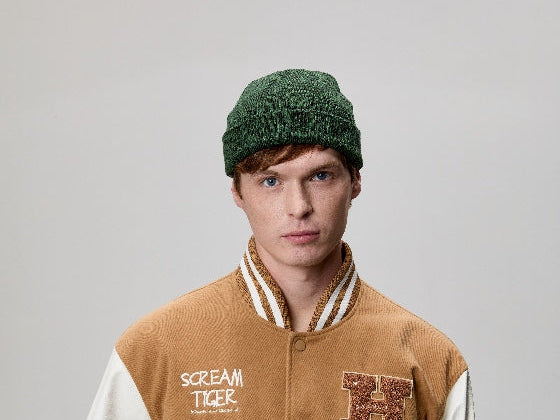
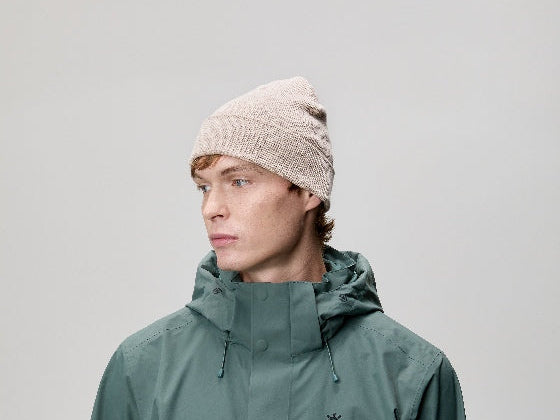
1. Knitted Hats & Beanies
-
Cuffed Beanies: Crown and cuff knitted as one continuous structure
-
Slouchy Beanies: Programmable crown shaping for natural drape
-
Balaclavas: Eye and mouth openings knitted directly, no cutting required
2. Functional Sports Caps
-
Running & Cycling Caps: Zoned ventilation and insulation
-
Helmet-Compatible Caps: Seamless, elastic construction for pressure-free wear
3. Fashion Hats
-
Jacquard & Openwork Designs: Complex patterns built directly into fabric
-
Integrated Decoration: Color blocking, ribs, and textures created without post-processing

Applications Beyond Hats
Integral knitting is widely used in:
-
Seamless sweaters and knitwear
-
Performance sportswear with functional zones
-
Accessories such as gloves, socks, and neck warmers
In technical textiles, the technology is also applied in medical, automotive, and industrial products.
Conclusion
Integral knitting offers a compelling response to the environmental and operational challenges facing the fashion industry. By producing near-final, seamless garments on a single machine, it dramatically reduces waste, labor intensity, and energy consumption.
For European brands focused on sustainability, durability, and responsible production, integral knitting supports a shift toward smarter manufacturing and just-in-time production models. As regulations tighten and consumer expectations rise, seamless technologies are likely to play an increasingly central role in the future of apparel and headwear manufacturing.
That’s all for today. If you have any questions or would like to explore seamless knitting solutions for hats or apparel, feel free to leave a comment below.

