
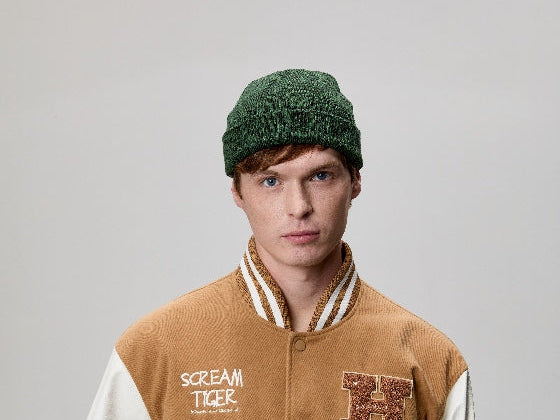
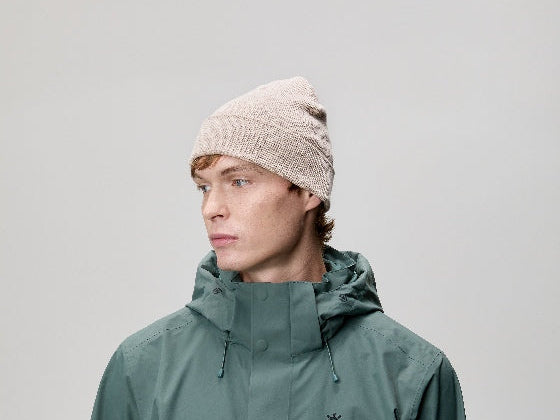

Before a single logo goes on a beanie, there's a decision that matters just as much: which silhouette are you actually building your brand around?Fit and style aren't cosmetic details you settle at the last minute — they're the first visual signal your beanie sends, long before anyone reads a tag or notices the stitching. A slouchy knit and a tight cuffed beanie can carry the exact same logo and still tell two completely different brand stories.
This guide walks through how to think about beanie style and fit as a branding decision, not just a product spec.
🔽 Quick Navigation
- 📌 Why Style Is a Brand Decision, Not Just a Fashion Choice
- 📌 The Core Beanie Silhouettes and What They Communicate
- 📌 Matching Fit to Your Audience
- 📌 Where Branding Fits Into the Style Decision
- 📌 Shape First: Creating Consistent Brand Styles with Knit Hats
- ❓FAQs
Why Style Is a Brand Decision, Not Just a Fashion Choice

Every beanie silhouette carries its own connotation. A close-fitting, structured knit reads as clean and corporate. A loose, oversized slouch reads as casual, youth-driven, streetwear-adjacent. Neither is "better" — but picking the wrong one for your brand personality creates a quiet mismatch that customers notice even if they can't name it. Before choosing a style, it helps to ask three questions:
- Who is actually going to wear this — staff, customers, or event attendees?
- What does the rest of your product or apparel line already look like?
- Where will the beanie be worn — indoors at a shop counter, outdoors on a trail, on stage at an event?
The answers usually point toward one of a handful of proven silhouettes, rather than a fully custom shape built from scratch.
The Core Beanie Silhouettes and What They Communicate

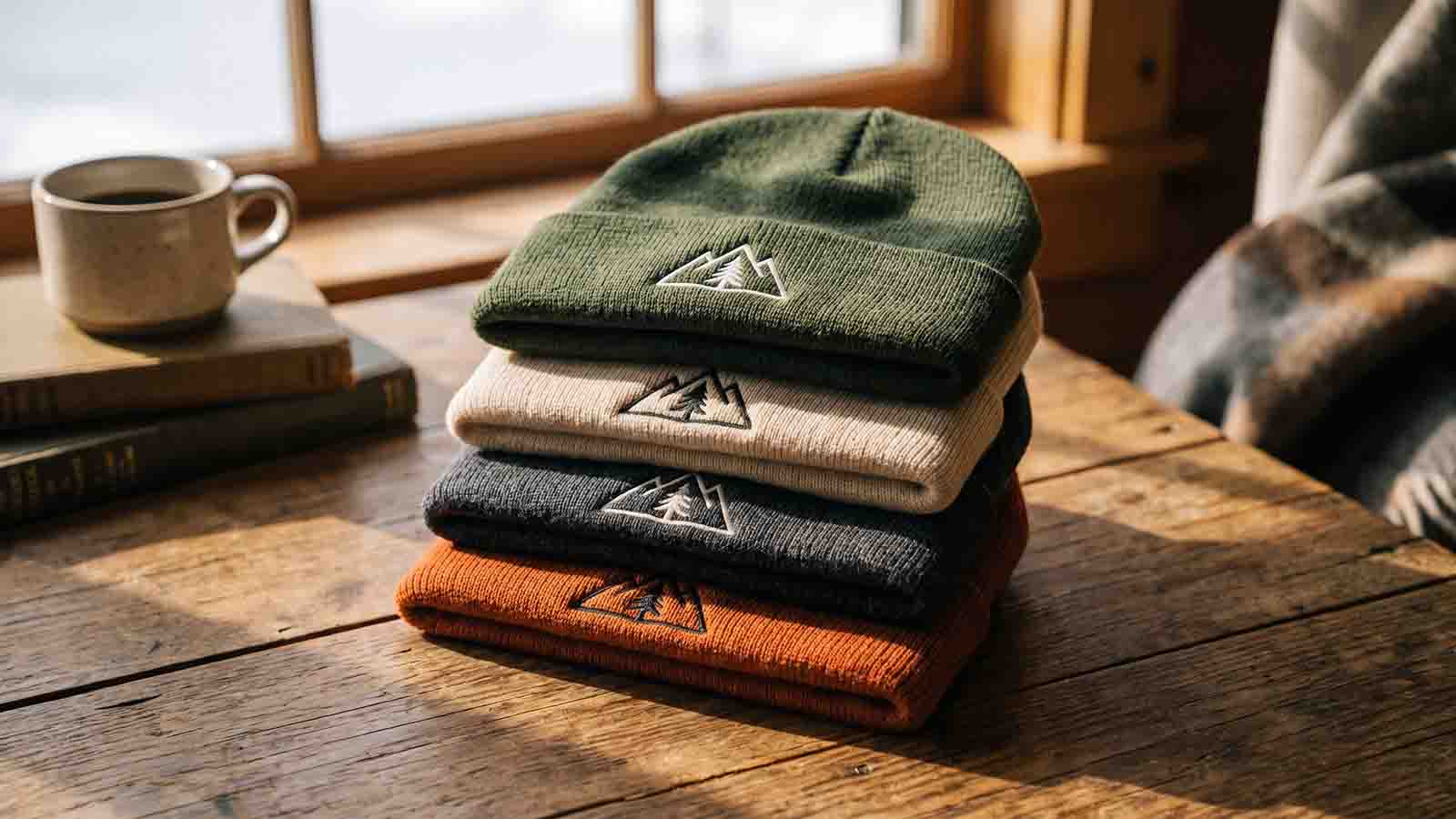
The cuffed, classic knit. This is the safest, most versatile option for brands that want their logo to be the focal point rather than the shape. The folded cuff also creates a natural, high-visibility band for embroidery or a woven patch — which is exactly why it's the default pick for corporate and retail branding.
The fisherman beanie. Short, close to the head, with a shallow crown — this style borrows its identity from workwear and outdoor heritage. It reads rugged and understated rather than trendy, which makes it a strong fit for outdoor, marine, or heritage-positioned brands. Fisherman Beanies is built specifically around this silhouette, and it's worth browsing if your brand leans toward a durable, no-nonsense aesthetic rather than a fashion-forward one.
The slouchy beanie. Longer in the crown with extra knit fabric that folds or drapes at the top, the slouchy beanie is the go-to for streetwear, music, and youth-oriented brands. It photographs well on social content and pairs naturally with oversized logo placement or tonal embroidery. If that's the direction your brand identity is heading, Foremost's Slouchy Beanies range gives you a starting silhouette to customize from rather than developing a pattern from zero.
The lined beanie. Some brands choose their silhouette based on a functional layer rather than shape alone — an inner lining changes how the beanie wears without changing its outward profile much. That's a slightly different decision axis (comfort and finish, not silhouette), and it's covered in more depth in the materials section of this guide series — but it's worth knowing this option exists at the style-selection stage, since it can be applied to more than one of the silhouettes above.
Matching Fit to Your Audience

Fit isn't just small/medium/large — it's about how forgiving or precise the beanie needs to be across different head sizes and hair volumes, especially if you're ordering for a mixed group rather than a single wearer.A few practical fit considerations brands often overlook:
- One-size stretch knits are the easiest to manage for bulk orders (staff uniforms, event giveaways) because there's no sizing chart to manage at checkout.
- Structured, closer-fit knits hold their shape better for retail display and photography, which matters if the beanie will sit on a shelf or in an e-commerce listing rather than being handed out directly.
- Cuff depth affects both fit and branding real estate — a deeper cuff gives embroidery more room to breathe, while a shallow or no-cuff style keeps the silhouette minimal.
If your beanies are going to a team or workforce rather than retail customers, it's worth looking at how style and consistency work together at scale — Foremost's Corporate Teams Custom program is built around exactly that use case, where a single approved silhouette gets replicated cleanly across dozens or hundreds of units.
Where Branding Fits Into the Style Decision
Once a silhouette is chosen, the branding decision narrows fast. A structured, cuffed knit generally favors a centered logo on the cuff — clean, symmetrical, easy to read at a distance. A slouchy knit tends to favor an offset or lower-crown placement, since a centered logo can get visually lost in the extra fabric.
This is also the point where color strategy starts to matter: a single-color knit lets your logo do all the talking, while a two-tone or heathered knit adds texture that some brands use deliberately, and others avoid because it can compete with the logo for attention.We go deeper into color and logo placement as a brand-recognition tool in a separate part of this guide — but at the style stage, the main thing to lock down is silhouette first, decoration second. Choosing the shape after the logo is already designed almost always creates rework.
Shape First: Creating Consistent Brand Styles with Knit Hats
Style and fit aren't a finishing touch you add after the branding is decided — they're the foundation everything else gets built on.A cuffed classic, a fisherman silhouette, and a slouchy knit each send a different signal before a single logo is visible, so the smartest starting point is matching silhouette to brand identity and wearer first, then layering in color, fit consistency, and logo placement on top of that decision.Get the shape right early, and every choice that follows — materials, decoration, packaging — becomes easier and more consistent.
❓FAQs
Q1: How do I know which beanie silhouette fits my brand?
Start with how and where it will be worn, and how it needs to sit alongside your existing product or apparel line. A structured, corporate-facing brand usually suits a classic cuffed knit, while a casual or youth-oriented brand often leans toward a slouchy or oversized fit.
Q2: Can one beanie style work for both retail and corporate/team orders?
Yes, but the priorities differ. Retail benefits from a structured fit that photographs and displays well, while team or workforce orders usually prioritize one-size consistency across a large group.
Q3: Should I choose the silhouette or the logo placement first?
Always the silhouette first. Logo placement, size, and color strategy are much easier to finalize once the shape and cuff depth are locked in — choosing them in the reverse order is the most common cause of costly rework.
Q4: Does cuff depth actually matter for branding?
Yes. A deeper cuff gives embroidery or a woven patch more visible surface area, while a shallow or cuffless design keeps the overall look more minimal and understated.